The problem
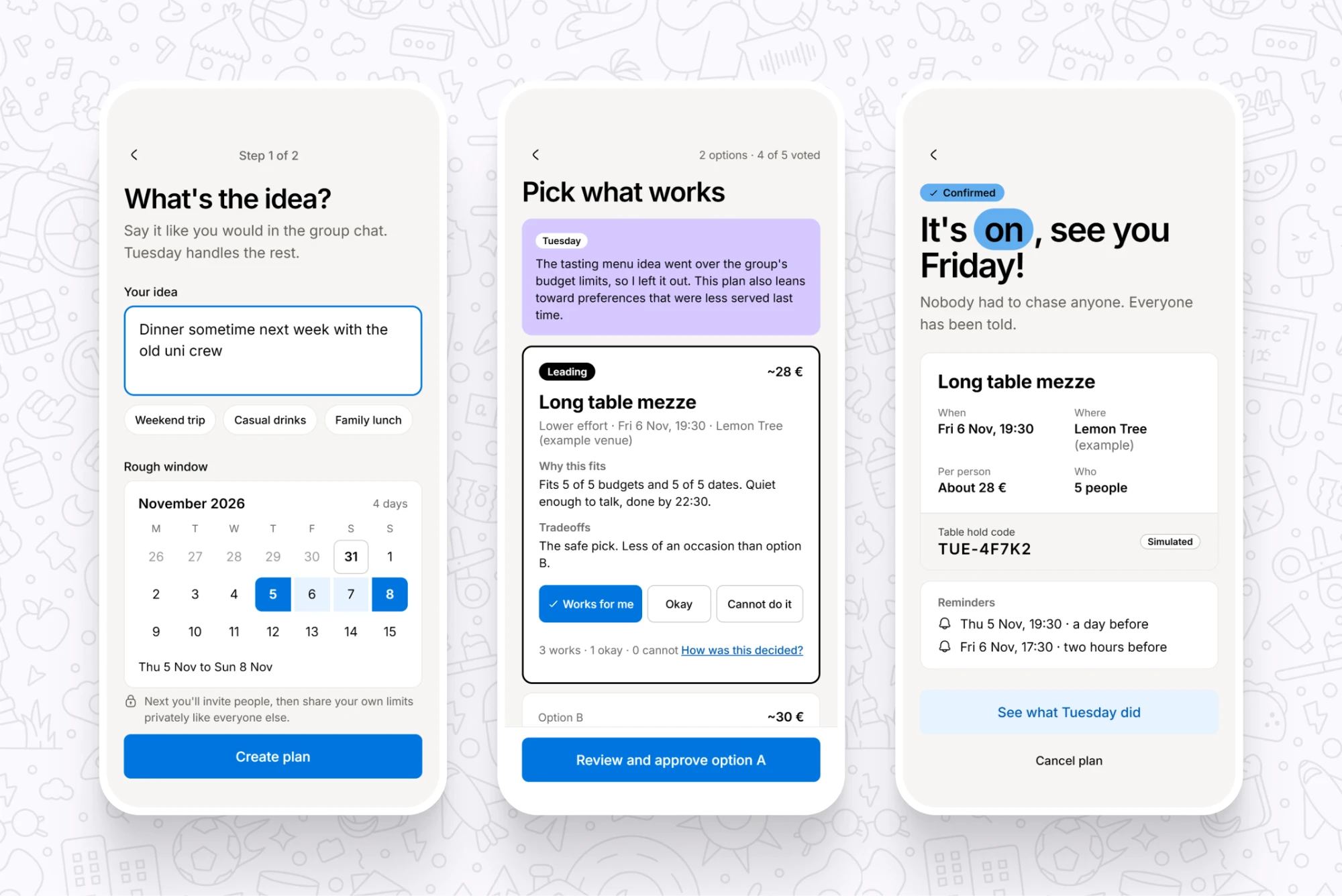
Friend groups plan in group chats, and the plans fade. Finding a date is easy. The hard part is what people won't say in front of the group: “I can't spend 60 euros right now.”
Tuesday lets each person share their limits with an AI agent privately. The agent suggests options that fit everyone and handles the next step once the group agrees. It works for a whole group, not one person, so it has to be fair and keep every answer private.
I designed all the flows and screens. I used Claude to stress-test the PRD and to write some of the copy.
Principles
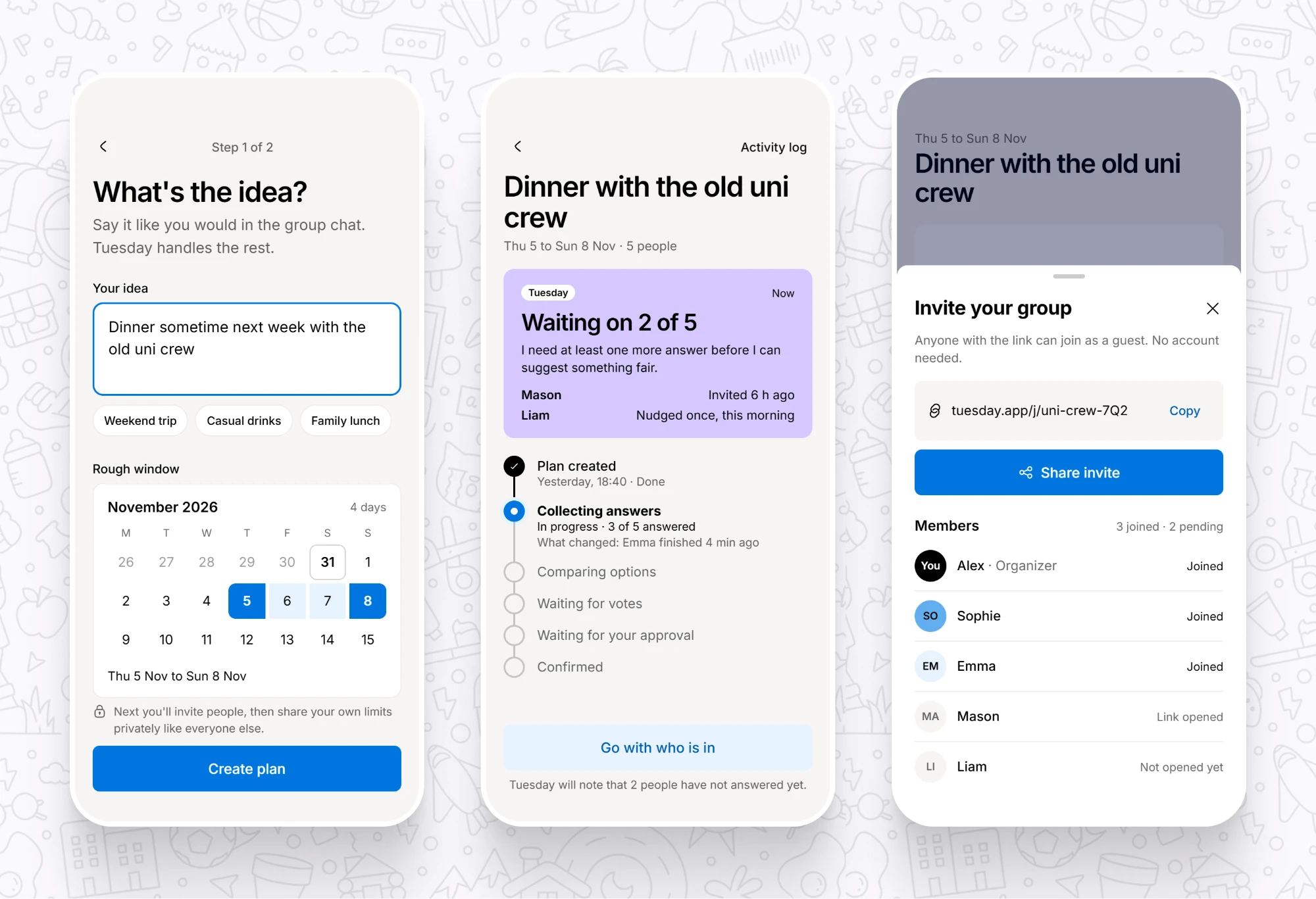
The agent holds private answers and acts for a group, so mistakes can be costly: a leaked answer, too many reminders, or a booking nobody approved. Before designing screens, I wrote five rules for every screen to follow. The decisions below each come from one of them.
- Private by default. Only the person who gave an answer can see it. The group sees totals.
- No leaks by inference. Removing names is not enough. An explanation must not let anyone work out who said what.
- The agent proposes, people decide. Anything that costs money or commits the group needs approval first.
- Show uncertainty. Guesses are marked as guesses. If no plan fits, the agent says so.
- Few reminders. Reminders are rare, short, and easy to mute.
The rules also shaped the scope. There is no chat between members, because a second group chat would bring the negotiation back into public. Bookings and payments are simulated and labeled that way. Anything the agent writes carries a small “Tuesday” label, so people can always tell its content from the group's.
Listening
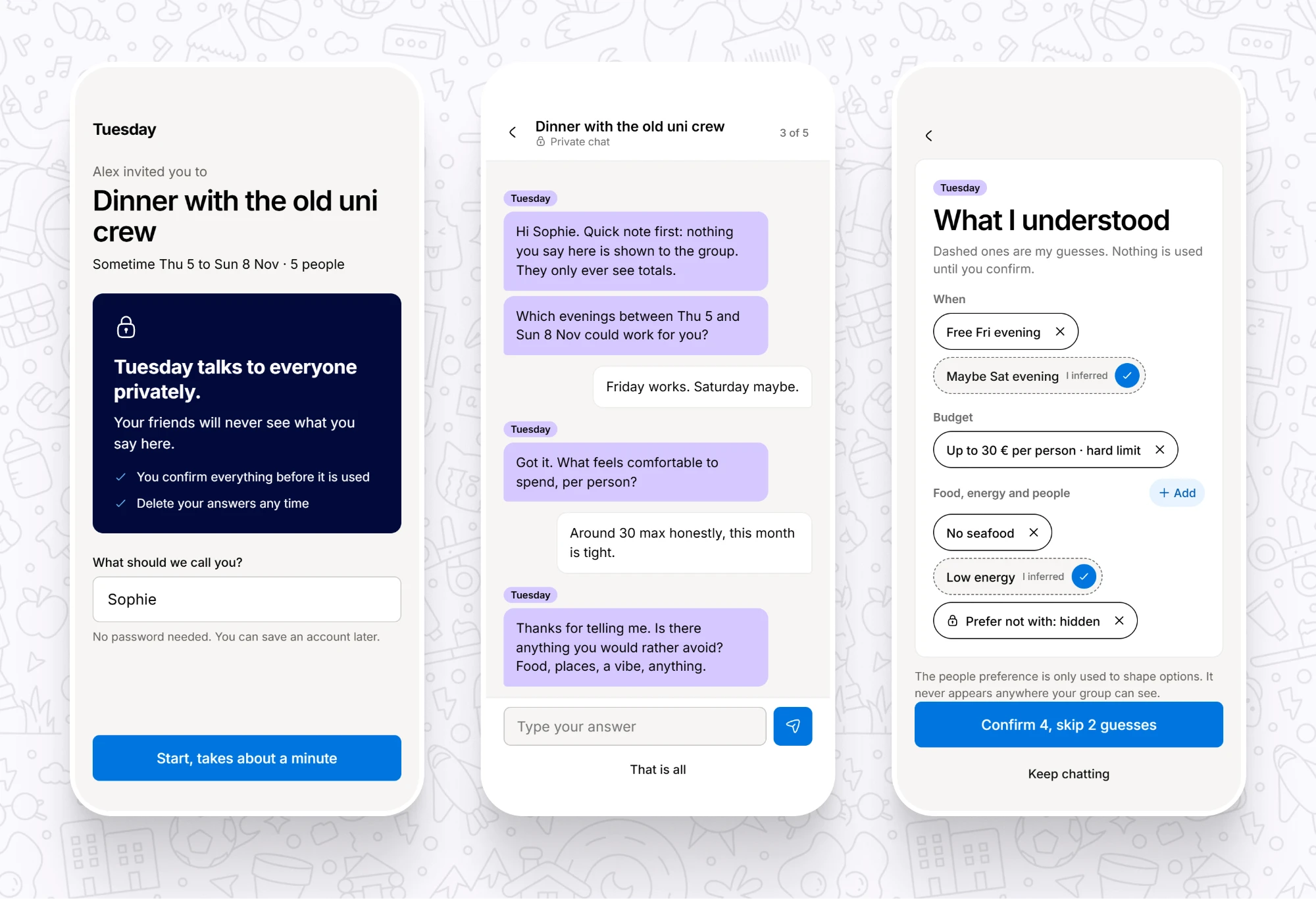
Each person answers in a short private chat: three to five questions with quick replies, about dates, budget, energy and anything they want to avoid. The first message says that nothing in this chat is shown to the group. I chose a chat over a form because a form reads like a poll, and a casual question makes it easier to say “I'm low on money this month.”
The agent then has to turn the chat into data, and it can get things wrong. So the chat ends with a “What I understood” card. What the person said appears as solid chips marked “You said”. What the agent guessed appears as dashed chips marked “I inferred”, and these are only used after the person confirms them. People often accept an AI's summary without checking it, so the card makes each guess easy to see and fix.
Explaining
People need to know why an option was suggested before they trust it. But any explanation can reveal something private, and this took the most work in the project.
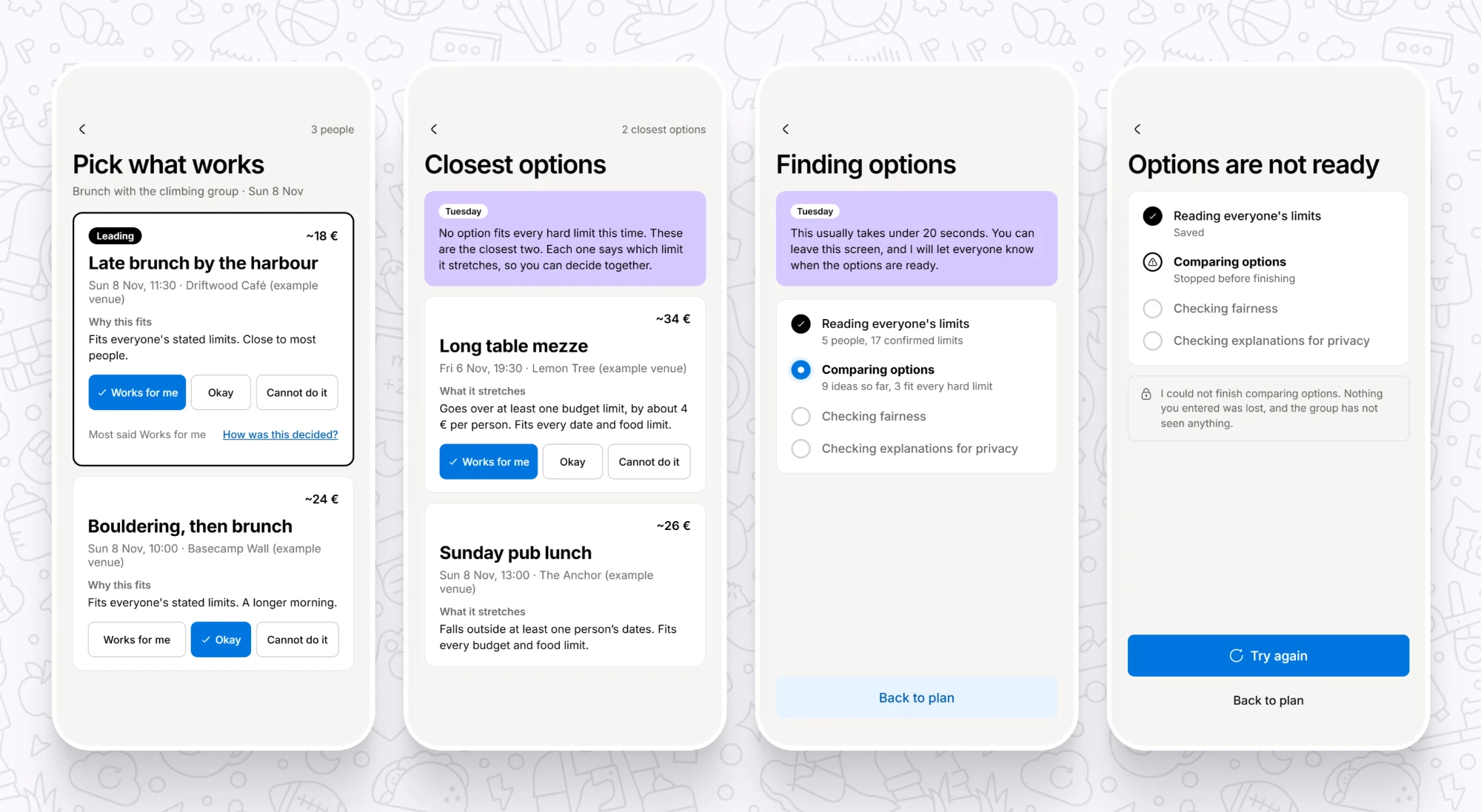
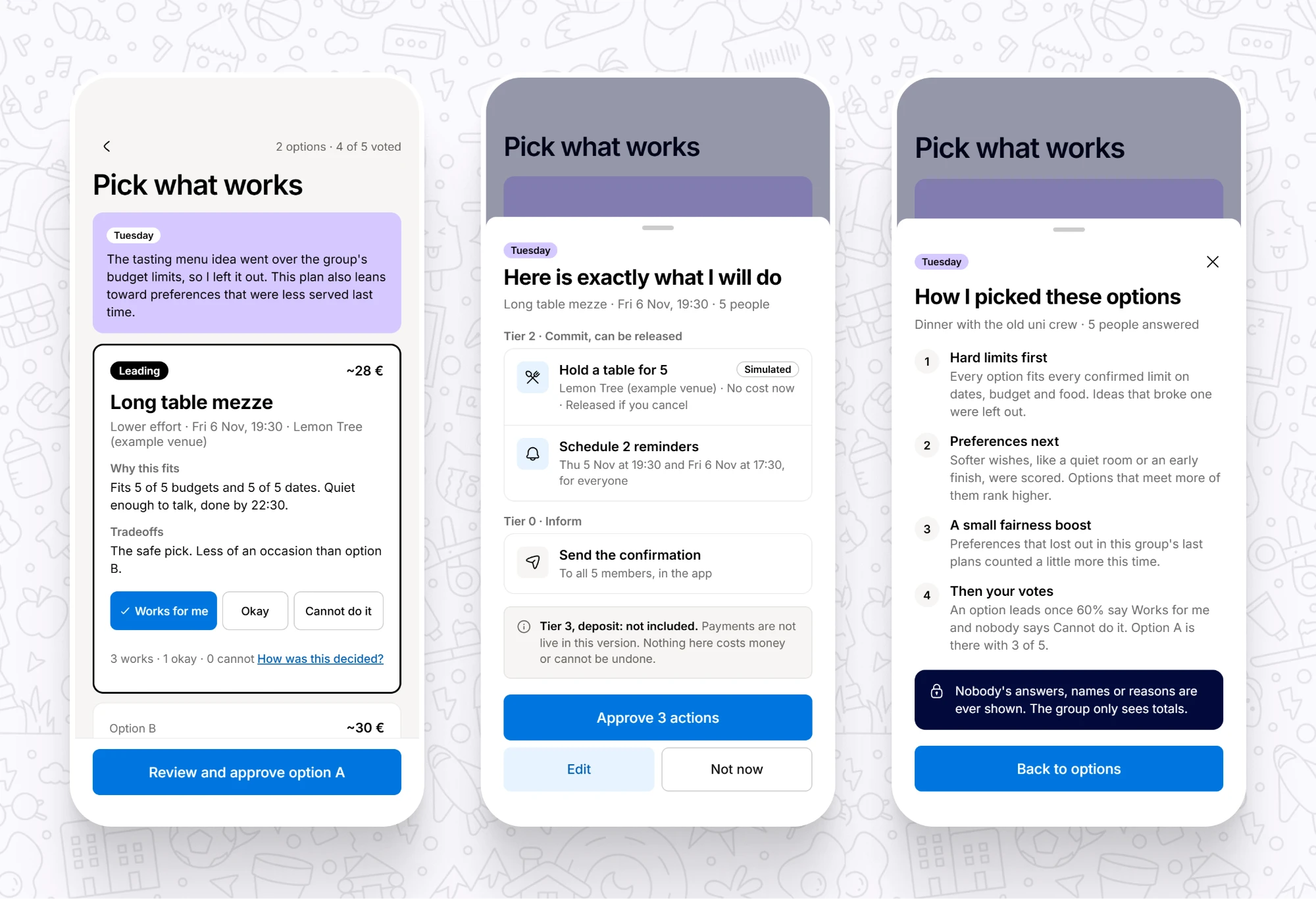
Options explain themselves with totals, like “Fits 5 of 5 budgets.” But in small groups, exact numbers and specific reasons can point at a person, so the agent rewrites them. Before the group sees any text, a separate check looks for names and private details. If the text fails twice, the agent uses a pre-written safe version.
In a group of three
When no option meets every hard limit, the agent says so, shows the closest options, and names the limit that would need to change, but not whose limit it is. Loading screens list the steps the agent is actually doing, like “Reading everyone's limits” and “Checking fairness”.
Acting
Tuesday doesn't stop at suggestions. It can hold a table, confirm the plan and set reminders, so I had to decide what it may do on its own. Low-risk actions like reminders run on their own. Holding a table needs the organizer's approval. Paying needs the organizer and each person who pays.
Before anything runs, the organizer sees one approval sheet. It lists each action with its risk, its cost, and a note if it can't be undone. The button names the number of actions, such as “Approve 3 actions”. The organizer sees votes as counts, and a “How was this decided?” link explains how the options were chosen.
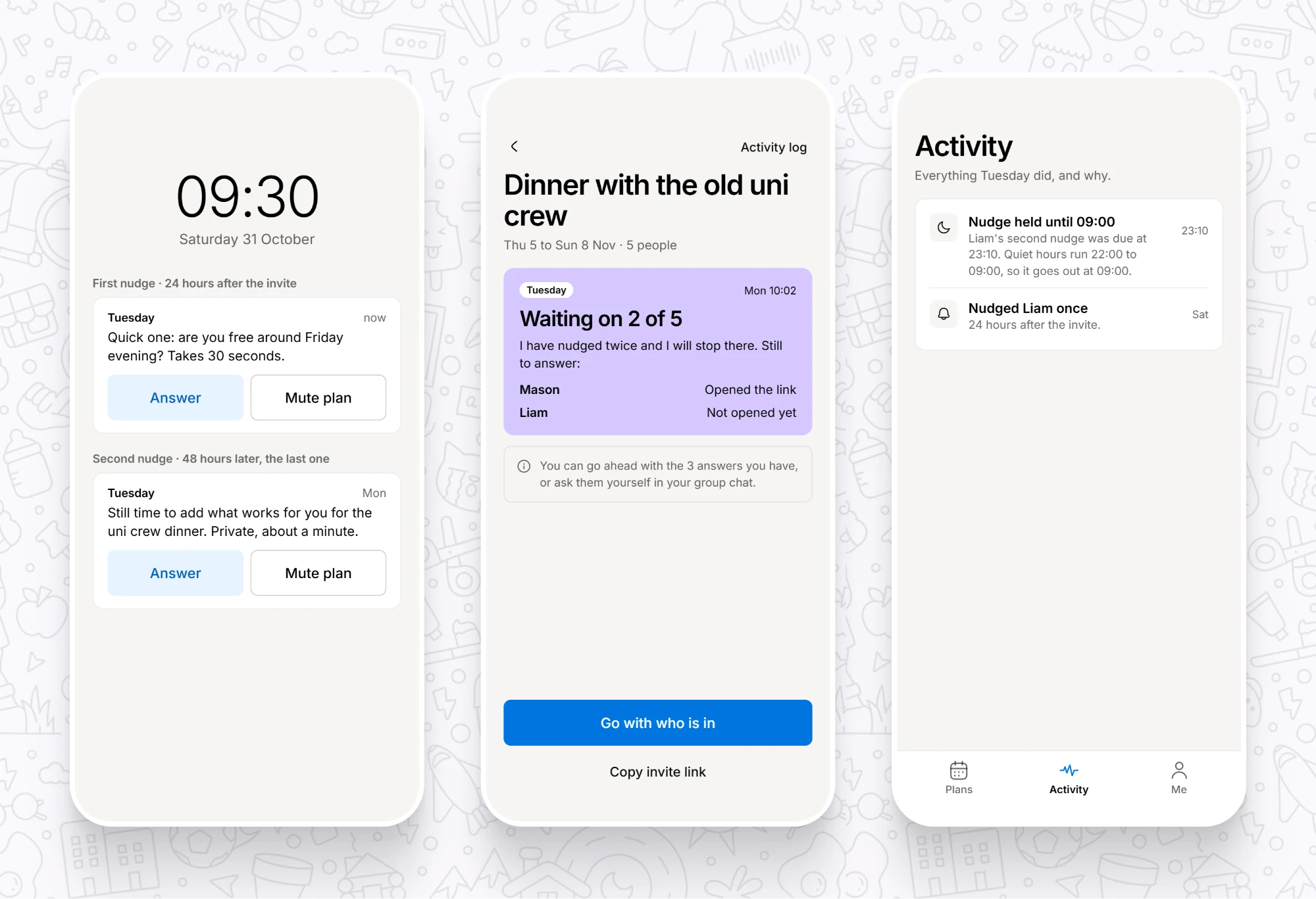
More reminders might get more replies, but they would make Tuesday as annoying as the group chat it replaces. The agent sends late responders two reminders at most, each one sentence with a one-tap reply, and never during quiet hours. After that, it tells the organizer who hasn't replied and leaves the next step to them.
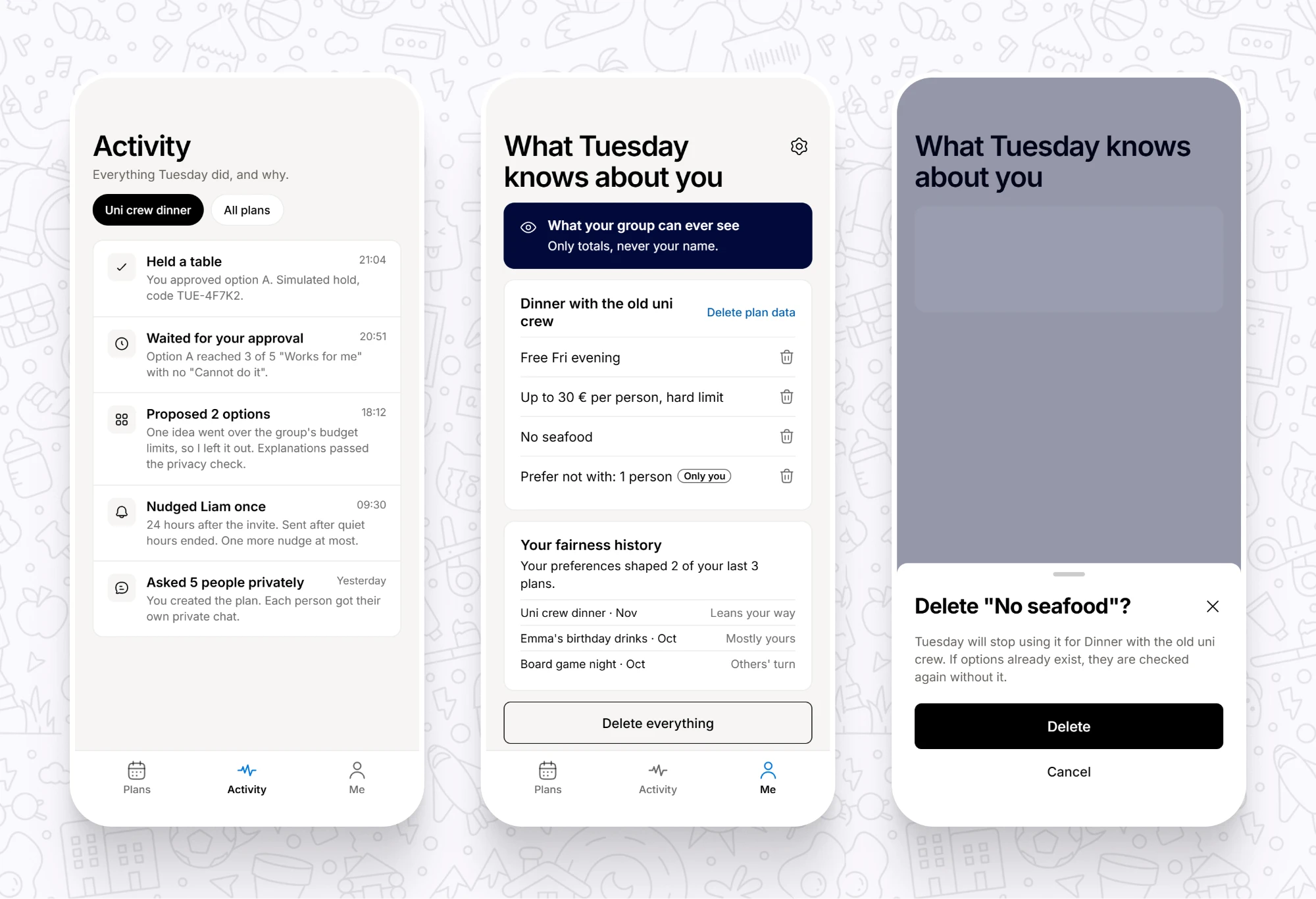
Every action is listed in the Activity tab with a short reason, and each person can see and delete what Tuesday knows about them. Over time, the agent also gives more weight to people whose preferences lost in earlier plans.
Outcome
Tuesday is a complete MVP design: four flows, 15 core screens and 45 states. A demo mode lets one person show the whole flow with simulated friends, including a budget conflict and a late responder. I haven't tested it with real groups yet.
A first test would measure:
- Time from idea to confirmed plan (target: under 48 hours).
- Share of invited people who finish the private chat (target: over 80%).
- How comfortable people feel sharing limits with Tuesday compared with the group chat.
- Whether people think the final plan was fair.
Most of the privacy work ended up in small choices: changing “2 of 3” to words, drawing guesses with a dashed outline, and naming the number of actions on the approval button. The decision I am least sure about is showing the organizer who hasn't replied. I chose to show names, because the organizer needs them to follow up. But it is the one place where the quietest person in the group can be singled out, so I would test it first.